Week 3 Post
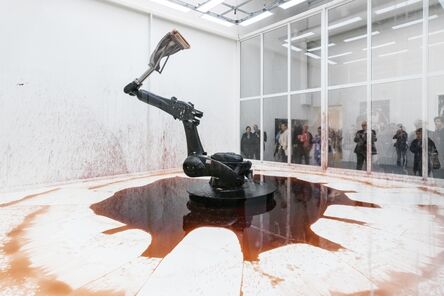
A video showcasing the motion of 'Can't Help Myself.'


The drawing 'Fairies' with the MSCHF Museum of Forgeries logo superimposed.
The idea is that now, rather than one person owning this art piece, 1000 people collectively do-- since they each have a copy with no way of knowing if theirs is the original. This action is a piece of art in and of itself, but it raises questions about what will qualify as art, and specifically original art, in the future. I personally think this matters more in conversations about art as a financial investment piece, rather than art as something to experience to invoke an emotion. If I buy a print of an artwork to hang in my home, I don't care that it's not the original, because it's there to be enjoyed by me, not to accrue value so that I can make more money later.
References:
Benjamin, Walter, "The Work of Art in the Age of Mechanical Reproduction." (1936).
Cassady, Daniel. “Hundreds of Andy Warhol Fakes, and One Original Drawing Worth $20K, Sold for $250 Each.” The Art Newspaper - International Art News and Events, 29 Oct. 2021, https://www.theartnewspaper.com/2021/10/29/hundreds-of-andy-warhol-forgeries-and-one-original-warhol-drawing-worth-dollar20k-sold-for-dollar250-each.
Davis, Douglas, "The Work of Art in the Age of Digital Reproduction (An Evolving Thesis: 1991-1995)." Leonardo, Vol. 28, No. 5, Third Annual New York Digital Salon. (1995), pp. 381-386.
Hampsink, Iris Olde. “Can't Help Myself – How a Relatable Robot Offers a Critical Reflection on Modern Society.” Diggit Magazine, 28 Feb. 2022, https://www.diggitmagazine.com/papers/can-t-help-myself-how-relatable-robot-offers-critical-reflection-modern-society.
Weng, Xiaoyu. “Can't Help Myself.” The Guggenheim Museums and Foundation, https://www.guggenheim.org/artwork/34812.
Hey Hearth! I found your blog to be really insightful. I also remember the "Can't Help Myself" piece going viral on TikTok, and remember feeling a bit sad by it because I couldn't help but personify the robot as if it were alive. This reminds me of a book I read recently, called "Klara and the Sun" by Kazuo Ishiguro, which is about a robot that relies on the sun to stay alive, and is surprisingly really good at understanding human emotions even though the robot itself doesn't have "human emotions". I wonder if we'll ever get to a place where robots and humans collaborate and become equals, and if we have the capabilities to give robots emotion.
ReplyDelete